
Mastic Gum Benefits for Teeth, Digestion, and More

This post may contain affiliate links. Read my full disclosure here.

What if chewing gum could do more than freshen your breath? Mastic gum benefits may include healthier teeth and gums, better digestion, and stronger jaw muscles.
I first became curious about mastic gum after hearing neurosurgeon Dr. Jack Kruse mention it in several interviews. He discusses the potential effects of chewing on cranial bones, cerebrospinal fluid circulation, and vagus nerve activity, among other things.
While some of his proposed mechanisms remain unproven, his comments sent me down a rabbit hole of research into this traditional natural remedy.
I’ve never been much of a gum chewer, but I’ve been looking for natural ways to keep my teeth, gums, and digestive system healthy as I age. As it turns out, there’s a surprising amount of research on mastic gum, quite apart from Dr. Kruse’s more unconventional theories.
I’ve been experimenting with this traditional tree resin to support my dental and digestive health. So far, I’ve noticed that my teeth feel cleaner and smoother with daily chewing – almost like they’ve been freshly cleaned at the dentist, but without the poking and prodding. I didn’t get this result with a blended product marketed for dental health (Dentagum).
Let’s take a look at what makes this natural chewing gum different, what the research says, and how you can try it yourself.
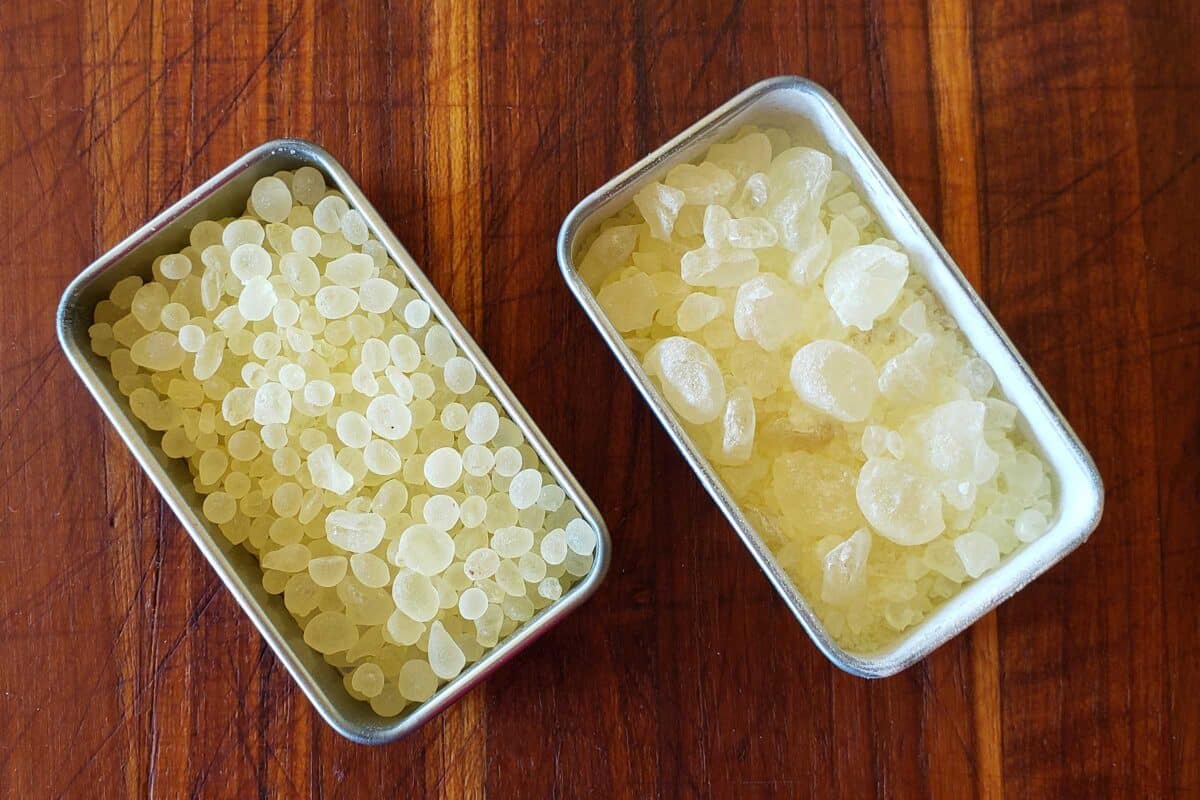
Table of Contents
What Is Mastic Gum?
Mastic gum is a natural resin harvested from the mastic tree (Pistacia lentiscus). The most prized variety comes from the Greek island of Chios, where it has been harvested for centuries.
Growers make small cuts in the bark, allowing the resin to drip out and harden into translucent pieces known as mastic tears. People have traditionally used mastic to freshen breath, soothe digestive troubles, and flavor food and beverages.
Unlike most modern chewing gums, pure mastic contains no artificial sweeteners, synthetic gum bases, or added flavors. It naturally contains aromatic compounds and triterpenes with antimicrobial and anti-inflammatory properties.
There’s also the issue of microplastics. A 2025 study found that both conventional and natural chewing gums released microplastics during chewing.
Interestingly, none of the ten gums tested contained pure mastic resin, as documented in the lead researcher’s master’s thesis. The researchers suggested that manufacturing and packaging might contribute to contamination in natural gums.
Mastic Gum Benefits at a Glance
| Potential Benefit | What the Research Shows |
|---|---|
| Cleaner teeth and healthier gums | Encouraging human studies |
| Increased saliva production | Supported by chewing studies |
| Relief from indigestion | Promising clinical trials |
| Stomach ulcer healing | Limited but encouraging evidence |
| Fighting H. pylori | Mixed clinical results |
| Improved jaw strength | Supported by general chewing research |
| Reduced inflammation | Preliminary human and laboratory research |
| Improved cholesterol and blood sugar | Limited clinical evidence |
1. Healthier Teeth and Gums
Mastic gum may help reduce plaque buildup and discourage some of the bacteria associated with tooth decay and gum disease.
A 2003 study found that chewing mastic reduced bacterial counts in saliva, plaque accumulation, and gum inflammation. A 2006 study found that chewing mastic for just 15 minutes reduced levels of Streptococcus mutans, a bacterium associated with cavities.
Chewing also stimulates saliva production. Saliva helps wash away food particles, neutralize acids, and supply minerals that protect tooth enamel. Chewing gum doesn’t replace brushing and flossing, but it may be a useful addition to your dental care routine.
2. Better Digestion and Less Stomach Discomfort
Digestion begins in the mouth, not the stomach. Chewing stimulates saliva production and helps prepare your digestive system for food. Mastic also has a long history of use as a remedy for stomach troubles.
In a 2010 randomized, placebo-controlled study involving 148 people with functional dyspepsia (indigestion), 77% of those taking mastic reported symptom improvement, compared with 40% of those taking a placebo. Participants experienced improvements in stomach discomfort, upper abdominal pain, and heartburn. A 2025 study also found encouraging results for digestive discomfort.
Most digestive studies use measured doses of swallowed mastic rather than chewing gum. If you’ve tried chewing mastic and it helped you with indigestion, let me know.
3. Stomach Ulcers and H. pylori
A 1984 clinical trial found that duodenal ulcers healed in 70% of patients taking mastic, compared with 22% of those taking a placebo. Mastic has also demonstrated antibacterial activity against Helicobacter pylori, a bacterium associated with stomach ulcers.
However, human clinical trials have produced mixed results. Mastic alone does not reliably eliminate the infection, but it could help set the stage for healing.
4. Stronger Jaw Muscles and a More Defined Jawline
Our ancestors spent considerably more time chewing their food than many of us do today. Modern food processing has reduced the work required of our jaw muscles. Research suggests that reduced chewing demands may be one of several factors influencing jaw development in children.
Read the book Nutrition and Physical Degeneration by Weston A. Price – or at the very least, look at the photos. Folks eating whole, unprocessed foods had wider jawlines and better teeth. Now, kids (and some adults) suck food out of pouches without chewing or even seeing said food.
It’s no surprise that roughly one in six American children ages 9 to 18 receives orthodontic care in a given year. National survey data also indicate that only 12% of adolescents have completely aligned upper and lower front teeth.
Adults can benefit from exercising their chewing muscles, too. A 2024 clinical trial found that regular gum chewing improved bite strength, although it did not significantly change jaw shape or muscle thickness.
Some mastic gum users report a more defined jawline, some don’t. Sure, I like the idea of a firm jawline, but I’m more interested in having all my teeth and being able to chew a steak when I’m 90.
Chewing also stimulates the trigeminal nerve and increases blood flow to certain areas of the brain. Researchers are exploring the relationship between chewing and cognitive function.
5. Other Potential Health Benefits
Researchers are investigating mastic gum for its potential to:
- Reduce inflammation associated with inflammatory bowel disease.
- Improve cholesterol and blood sugar levels.
- Protect against oxidative stress.
- Discourage the growth of certain harmful microorganisms.
For a deeper dive, see the scientific review Overview of Chios Mastic Gum Effects on Human Health.
Chewing tree resin isn’t unique to the Mediterranean. Many Native American and First Nations peoples traditionally chewed spruce and other tree resins for pleasure and health.
America’s first commercially successful chewing gum, introduced in Maine in 1848, was made from spruce resin, building on the traditions of the Wabanaki people.
In a way, switching to natural resin gum is getting back to our chewing gum roots.
My Experience with Greco Gum
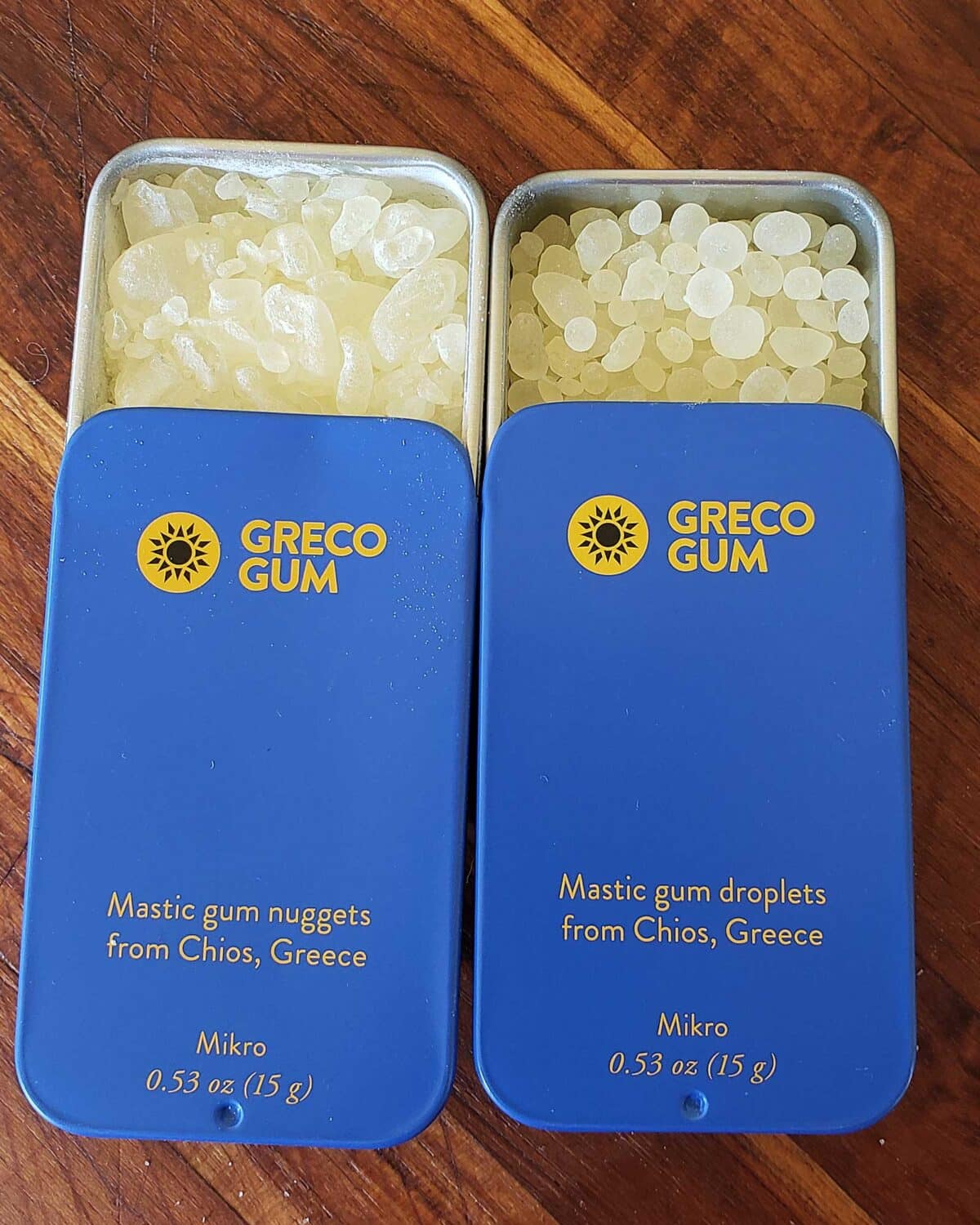
The folks at Greco Gum sent me tins of their mastic droplets and nuggets to try. I’d previously been chewing Dentagum, which contains mastic along with several other ingredients. The Greco products are pure mastic resin.
I liked them enough that I feel comfortable recommending them to you. I did join their referral program, so if you purchase through my link I earn a commission at no extra cost to you.
Mastic nuggets have a texture more similar to regular chewing gum. They’re softer and somewhat stickier. When one of the nuggets started sticking to my teeth, I mixed in some droplets, which helped. Greco recommends chewing 1-2 nuggets at a time.
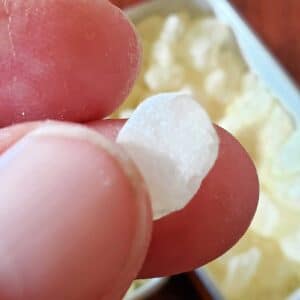
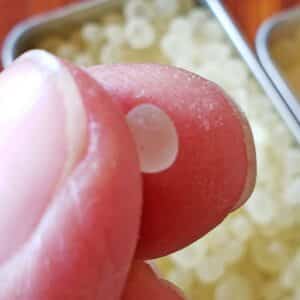
Mastic droplets are firmer and, in my experience, less sticky. They give your jaw muscles a little more of a workout. Greco recommends chewing 5-7 droplets at a time.
The flavor may not be for everyone, but I like it. It tastes real – a bit like a mildly spicy conifer tree, but much milder than some of the local conifer sap I’ve tried chewing. (That was not a pleasant experience!)
I’m particularly pleased with how clean and smooth my teeth feel after regular chewing. It’s too early to draw conclusions about digestive benefits, but I’m enjoying the experiment.
How to Chew Mastic Gum
Start with a small amount of resin. It may crumble initially, but should gradually soften and form a cohesive piece of gum.
- Allow the resin to soften before chewing vigorously.
- Start with five to ten minutes of chewing.
- Alternate chewing sides to distribute the workload.
- Gradually increase chewing time if comfortable.
- Discard the gum when you’re finished (or put it in the compost).
Don’t overdo it. More chewing isn’t necessarily better.
Mastic Gum Side Effects and Precautions
Mastic is generally well tolerated in short-term studies, but long-term safety data is limited (other than those people around the Mediterranean who’ve been chewing it for over 2,500 years).
Excessive chewing may cause jaw soreness, headaches, or aggravate temporomandibular joint (TMJ) problems. If you have a lot of dental work, gum chewing is probably not a good fit. This gum is firm and sometimes sticky.
Those with allergies to pistachios or related plants should check with an allergist before trying mastic. Safety during pregnancy and breastfeeding has not been well established.
Where to Buy Mastic Gum
Look for pure Chios mastic gum without unnecessary additives. If you’d like to experiment along with me, you can find the nuggets and droplets at Greco Gum. You can use my referral link to get 10% off of your order – https://grecogum.com/COMMONSENSEHOME
The company tells me they often sell out during the holiday season. Since mastic is an agricultural product with a limited annual harvest, supplies aren’t unlimited.
Have you tried mastic gum? I’d love to hear about your experience. Leave a comment below and let me know what you’ve noticed.
About the Author

Laurie Neverman is the founder of Common Sense Home and author of Common Sense Preparedness. From her Wisconsin homestead, she combines firsthand experience, traditional knowledge, and scientific research to help readers make informed choices for healthier, more resilient lives. She’s a lifelong learner who enjoys putting practical natural remedies to the test.