
How to Make Kolache

This post may contain affiliate links. Read my full disclosure here.
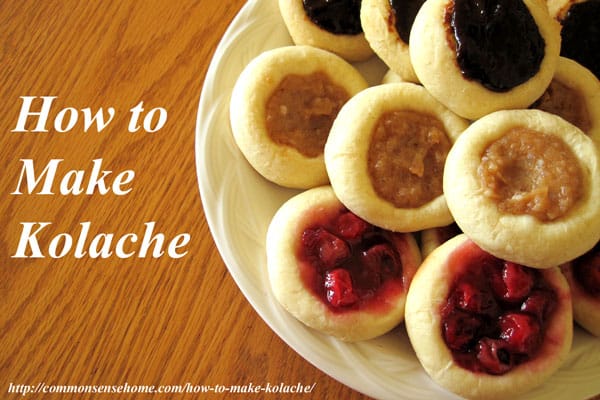
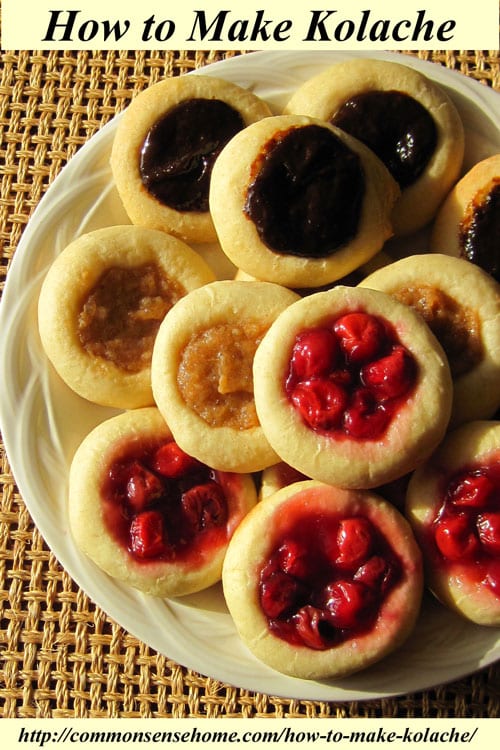
Kolache, kolace, kolach, or kolacky – no matter how you spell it, just about everyone enjoys these tasty treats. My momma taught me how to make kolache the way I do in this post, but there are many different shapes, sizes and fillings. From rounds to folded pockets, hand sized to pie-sized, sweet to savory, your imagination seems to be the limit.
Would you like to save this?
Most sources seem to agree that the name “kolache” (however you spell it) comes from the Czech word for “cookie”. As for the origin of kolache, no one is really certain, but this story from the Polish Art Center is sweet:
The origin of the kolache is uncertain. One version goes like this: “A mother, busy with her weekly baking, broke off a few pieces of dough to keep her little daughter occupied. The little cook kneaded her dough into flat cakes. She selected several plums from a bowl on the table and placed the fruit into the center of the round piece of dough. Her cake went into the oven along with Mother’s bread.
The father, coming in from a long day in the fields, picked up the cake cooling on the table and took a bite. The hot juice of the plum spurted into his mouth, causing him to hop around on one foot around the table. The little girl shouted with glee saying, ‘Tatinek (father).. kolac’. And that’s how kolache got its name. Soon the fame of the kolache spread throughout the Czech-Austro-Hungarian empire and on to the New World.”
How to Make Kolache – Don’t Make the Mistake My Mom Did
My recipe is from my mother’s mother, Mary, was of Czech heritage. When my mother was a young girl, she left school after the eighth grade (not uncommon in those days) to start working. Her first job was to do the weekly baking for a neighbor with a large family and a new baby. Back then, all the farm families did baking once a week, and that baking usually involved kolache, at least in the area around Haugen, Wisconsin where mom grew up.
Mom was pretty nervous on her first day, but she finished the kolache and waited for the husband to try them when she was done. He took his first bite, got a bit of a questioning look on his face, picked up the salt shaker and sprinkled a bit of salt on the pastry and ate the rest. “Not too bad”, he said. (Yes, mom had forgotten the salt in the dough.)
Since then, my mom probably baked several thousand kolache (and put the salt in most of the time). We always had kolache for the holidays, and fairly often during the rest of the year when there were more of us at home. (I’m the youngest of six kids.) We used to make them sometimes for the catering business, too.
Now I generally only bake them for the holidays, as I have cut back on our sweets, but I still want to make sure this family tradition gets passed on to the next generation. I was fortunate to have my niece and nephew visit with their spouses (and toddler) this weekend. We had a nice visit, and they pitched it to help make “kolache just like grandma used to make”.
Czech Kolache Recipe
Ingredients
- 2 cups warm milk
- 2 packages dry yeast (4 1/2 teaspoons) or 3 1/2 teaspoons SAF-INSTANT yeast
- 1 ½ tsp salt
- ½ cup sugar
- 2 beaten eggs
- ¾ cup lard or poultry fat, melted, plus extra for coating dough
- 5 to 6 cups flour
Directions
Using a large bowl (you can do this in a KitchenAid mixer or Bosch universal mixer with a dough hook, or by hand), dissolve yeast and milk. Add sugar and salt, let set until bubbles form (about 10 minutes). This is called “proofing” the yeast, and is required for the dry yeast but not for the instant yeast, although I often do it anyway with recipes like this. It helps to activate the yeast, warming it nicely so you get alight, fluffy dough.
With wooden spoon add lard or poultry fat, eggs and 1 cup flour. Using lard or poultry fat (my mom preferred duck fat, when available) or other saturated fat will result in a more tender dough and better shelf life.
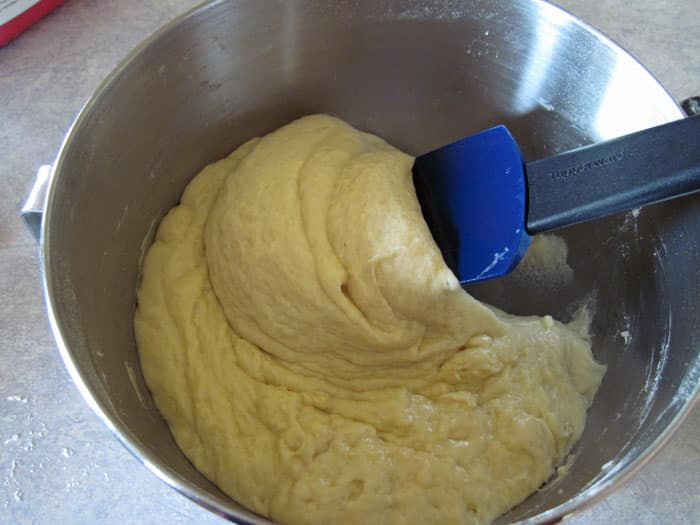
Add rest of flour slowly, beating after each addition, to form a soft dough. Mom always used to scold me because I’d make the dough too stiff. You want it to be a bit sticky.
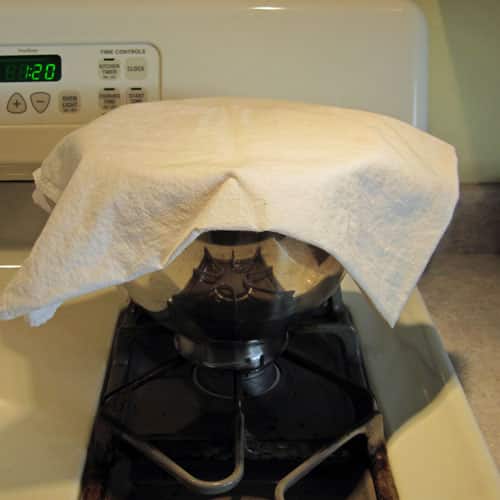
Cover with towel. Let raise in a warm place until double in size. I often tuck mine on the back of the stove, or you can place it on top of the fridge, or even set it in a bowl of warm water. Just don’t leave it alone too long on a warm day, like the one time we came home from church and found kolache dough all the top of the stove and oozing down the front of the stove. That was a real mess to clean up!
Shaping the Kolache
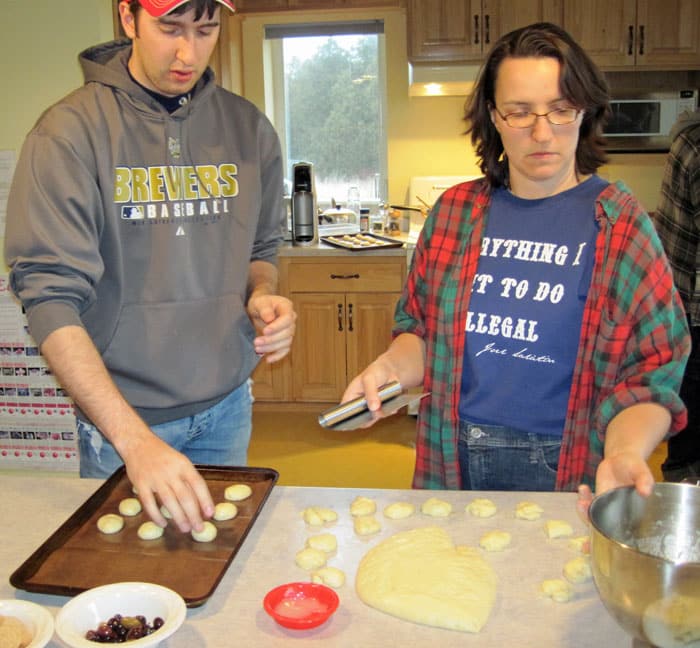
Punch down dough and cut into golf ball sized pieces. Grease your hands before working with the dough, as it will be sticky. Palm roll the dough into balls. Here’s a shot of my nephew and I rolling out the dough. I like to cut the mass of dough apart with my kitchen chopper/scraper.
Place balls on well greased pan or pan lined with parchment paper or reusable parchment paper and brush balls with melted oil. Let raise until dough is light (double height). Preheat oven to 375°F.
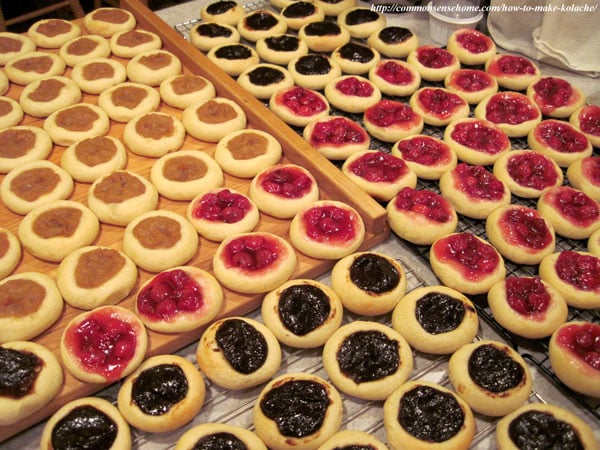
Press centers with fingers to form a depression, then fill depression with fruit fillings. Use pie fillings such as: blueberry, peach, apple, raspberry, prune, applesauce, poppy seed, lemon and apricot. You can use commercially prepared fillings, but most of the time I make my own. (See filling recipes below.) you want to fill them about level, not too full or they will run all over.
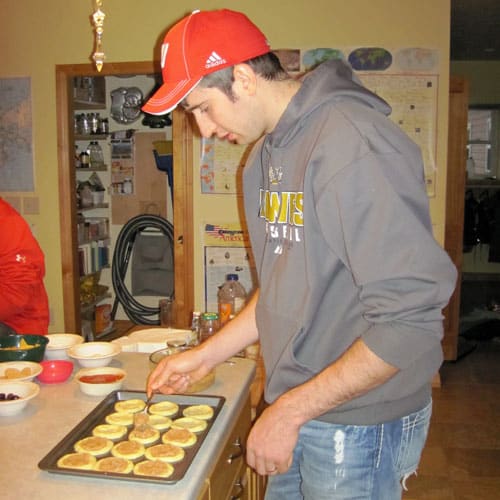
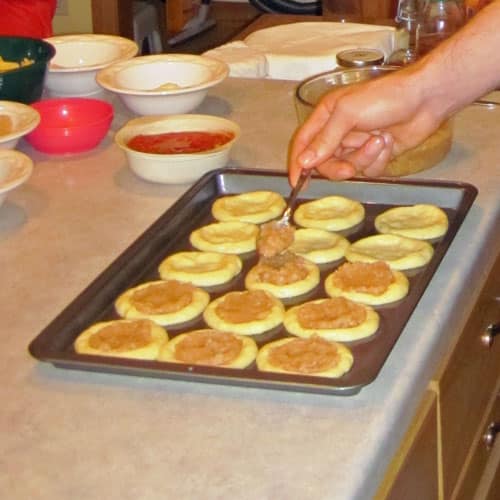
Bake at 375°F until light golden brown, about 10-12 minutes. Do not overbake! Remove from pan to cool on a wire rack. Makes around six dozen.
Filling recipes for Kolache
Fresh or Frozen Fruit Filling
1 qt fresh or frozen fruit such as raspberries, cherries, peaches, etc
4 tbsp cornstarch
1 ¼ cup sugar
Pinch of salt
In a small bowl, mix sugar, cornstarch and salt together. Combine all ingredients in top of double boiler, cook until thick stirring often. Cool until thick. If cooking in regular pan be careful not to scorch your fruit. Be sure to premix your sugar and cornstarch, or you’re likely to get lumps.
Dry Fruit Filling
Prune, peach, or apricot filling: Cook 2 lbs of dried fruit in enough water to cover until tender. Drain and pit if necessary. Then blend in ½ cup sugar, 1 teaspoon vanilla and/or ¼ teaspoon cinnamon.
Applesauce Filling
Use 1/4 cup tapioca granules for every four cups of applesauce. Add cinnamon and sweetener to taste.
Finding Lard or Poultry Fat
If you don’t have lard, you can use butter, palm shortening or coconut oil, but the flavor and texture varies a bit with each type of fat.
Some grocery stores do carry it, but much of the regular grocery store lard is hydrogenated.
When we don’t have home rendered lard or poultry fat, I hit the small butcher near us. They sell 2 cup containers of plain, non-hydrogenated lard. Ethnic stores would be another good place to look.
Print Friendly Recipe
PrintCzech Kolache
This lightly sweetened, fruit filled pastry recipe has been handed down in my family for generations.
Ingredients
- 2 cups warm milk
- 2 packages dry yeast (4 1/2 teaspoons) or 3 1/2 teaspoons SAF-INSTANT yeast
- 1 1/2 tsp salt
- 1/2 cup sugar
- 2 beaten eggs
- 3/4 cup lard or poultry fat, melted, plus extra for coating dough
- 5 to 6 cups all-purpose flour
Instructions
- Using a large bowl (you can do this in a KitchenAid mixer or Bosch universal mixer with a dough hook, or by hand), dissolve yeast and milk. Add sugar and salt, let set until bubbles form (about 10 minutes).
- With wooden spoon add lard or poultry fat, eggs and 1 cup flour.
- Add rest of flour slowly, beating after each addition, to form a soft dough. You want it to be a bit sticky.
- Cover with towel. Let raise in a warm place until double in size.
- Punch down dough and cut into golf ball sized pieces. Grease your hands before working with the dough, as it will be sticky. Palm roll the dough into balls.
- Place balls on well greased pan or pan lined with parchment paper or reusable parchment paper and brush balls with melted oil. Let raise until dough is light (double height). Preheat oven to 375°F.
- Press centers with fingers to form a depression, then fill depression with fruit fillings. Use pie fillings such as: blueberry, peach, apple, raspberry, prune, applesauce, poppy seed, lemon and apricot. You can use commercially prepared fillings, but most of the time I make my own. (See filling recipes below.) you want to fill them about level, not too full or they will run all over.
- Bake at 375°F until light golden brown, about 10-12 minutes. Do not overbake! Remove from pan to cool on a wire rack. Makes around six dozen.
Fresh or Frozen Fruit Filling
1 qt fresh or frozen fruit such as raspberries, cherries, peaches, etc
4 tbsp cornstarch
1 ¼ cup sugar
Pinch of salt
In a small bowl, mix sugar, cornstarch and salt together. Combine all ingredients in top of double boiler, cook until thick stirring often. Cool until thick. If cooking in regular pan be careful not to scorch your fruit. Be sure to premix your sugar and cornstarch, or you’re likely to get lumps.
Dry Fruit Filling
Prune, peach, or apricot filling: Cook 2 lbs of dried fruit in enough water to cover until tender. Drain and pit if necessary. Then blend in ½ cup sugar, 1 teaspoon vanilla and/or ¼ teaspoon cinnamon.
Applesauce Filling
Use 1/4 cup tapioca granules for every four cups of applesauce. Add cinnamon and sweetener to taste.
Notes
- Store in a sealed container at room temperature. Best if eaten within a few days of baking. May be frozen for up to a month. Place wax paper between layers of kolache to keep them from sticking together.
It looks like we have a new kolache fan in the family.
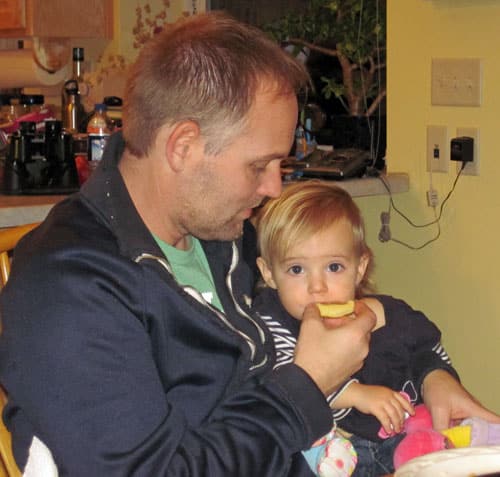
I hope you enjoy this recipe, and I wish you many wonderful days of sharing holiday traditions with your loved ones. if you’ve enjoyed this post, please pass it along or leave a comment. Share your holiday traditions – or your family’s version of kolache.
You may also enjoy:



I was wondering can you freeze these cookies.
You can freeze these pastries in layers with wax paper or parchment paper between. The quality will not be quite as good as fresh, but acceptable.
Would these be just as good,using Tallow ? They look delish………………….
I find the taste of tallow to be a little strong for my palate when used in sweet baked goods (I prefer to use it for savory dishes), but if you are used to it and like it, it may be okay.
These kolachy look great! I like them best when they are fruit filled on top, like these! They can be difficult to store without jam filling getting all over, so I designed a storage solution. Come check out my blog about Kolacky – http://partykitchen.wordpress.com/2012/12/06/kolacky/
What a lovely tradition. My family doesn’t really have anything like that but my husband’s family is from a very German town and they all make springerle during the holidays.
Hmmm. I have never made Kolache this way. I have always made the long rolls that my Czech Baba taught me. My favorite is the nut filling. In Youngstown, Ohio, where there are still lots of Czechs you can find big 5# cans of poppy seed filling. I don’t like the poppy seed filling. But I do like the apricot. We always would spend the entire day making kolache for the holidays.
I’ve never seen the long rolls, although I have seen folded squares. I think there are many ways of making them (maybe more) as there are ways to spell the name.
Hi Laurie,
We just love Kolache, and your tutorial is excellent. I would love to have one or two right now they look so good. I will be giving your recipe a try very soon. Thank you so much for sharing with Full Plate Thursday. I want to wish you and your family a very Merry Christmas!
Come Back Soon,
Miz Helen
This is a yummy recipe…
Midweek Fiesta
Linda, those sound lovely, a bit like the Hungarian rolls I also make: https://commonsensehome.com/how-to-make-hungarian-rolls/
Your Kolache look wonderful….. I as a young bride years ago moved to this upstate New York area ….. a new lady friend , polish gramma taught her to make kolache as a young girl… she taught me …. every Christmas we make them … I was taught to roll out the dough ,score off squares… place a roll of nut filling, roll up , pinch ends… bake… dust with confectionary sugar…. so delicate…. I will have to try your method….. thank you … Linda
Believe it or not, I do have a poppyseed grinder. I found it at an estate sale a couple of years ago. I've grown poppy plants in my garden, too, although not as many as my grandmother. She used to have an entire small field to produce their poppy seeds for the year. Mom would freeze her kolache fillings, too, but she used to bake a lot more than I do. With just a single batch of dough, it's not much to make filling and bake in the same day.
At the local Czech fest in our area, all the kolaches look similar to the ones shown above. The variations around the country are interesting.
I'm sorry, but it isn't a kolache unless it has poppyseed filling–:). Do you want my North Dakota Czech grandma's recipe (from early 1900's): 3 cups ground poppy seed; about 1/2 c. raisins, 1 c. sugar, 2 c. milk and 1/2 c. whipping cream. Cook that in a cast iron frying pan either in the oven or on the stove until almost dry, stirring occasionally. Put in in a bowl to cool. When it is cool, add 1 cup sugar, 1/2 tsp. anise and 1 tsp. cinnamon. Good source for poppy seeds is in bulk spice part of a store. It's best to grind them in your grandparents' poppy seed grinder (another smile, but you can still buy poppy seed grinders if you are inclined), but if you don't have that you can use any grinder-type device, including a good blender. This makes a lot of filling and what you don't use can be frozen. Making the filling is work on its own, and I often still follow my grandma's strategy of making the filling one day and kolaches the next. Our kolaches are always closed. Family lore was that the open-faced kolache were German in origin, not Czech.
Enjoy!
Julie – my grandmothers both had aprons just like your grandmother's. 🙂 I suspect it had to do with laundry day coming only once a week with a ringer washer.
This is wonderful! I also posted something about kolaches on the holiday barn hop. After I submitted my post, I saw another post (your post!) about kolaches. I didn't realize they were so popular. My post is titled, "Grandma's Apron." http://www.modernstead.com/grandmas-apron/ Please stop by and check it out 🙂
Anne- on your poppyseed filling, did you start with plain poppyseeds? Those can be hard to track down. My grandmother used to raise a small field of them to use for baking.
Thanks for sharing, Laurie! Our recipes are very similar, of course. The sweet dough is exactly the same; just different fillings. I made my kolache on Saturday, too. Did the "logs" with walnut paste, and then muffins with poppy seed filling. Yummy! 🙂 This year, though, I did "upgrade" the sweetener: in the dough, I used raw agave nectar, and in the walnut & poppy seed fillings I used organic evaporated cane juice.
Genevieve – I've never mastered wood stove cookery, but my mom cooked on a wood stove when she was growing up.
Anonymous – yes, I made the Hungarian Rolls, and will hopefully have that recipe up today. Busy weekend!
Did you make the Hungarian Rolls too?
I am of Moravian decent myself and have my grandmother's recipe. She learned to cook them in a my great grandmother's wooden stove. It takes a lot of room but I feel they are with me on the occasions when I make them. It feels good to be carring on a piece of history.
Thank you for sharing your history with us.
– Genevieve
Genevieve, can you send me your recipe. My sister is here and we are going to try and make our grandmother’s recipe. We tried several years ago and it just doesn’t come out the same. Grandma was of Moravian decent and maybe yours will help us. My sister made them once with our grandma but grandma did not use a recipe.
Corinne – The shirt says "Everything I Want to do is Illegal – Joel Salatin". 😉
Can I use butter?
Sure, if that’s what you have on hand.
thanks for this, I love Kolaches and am happy to have a good recipe to work from. What does your shirt say in the picture?