
Before You Plant Sunchokes, You Need to Read This Post

This post may contain affiliate links. Read my full disclosure here.

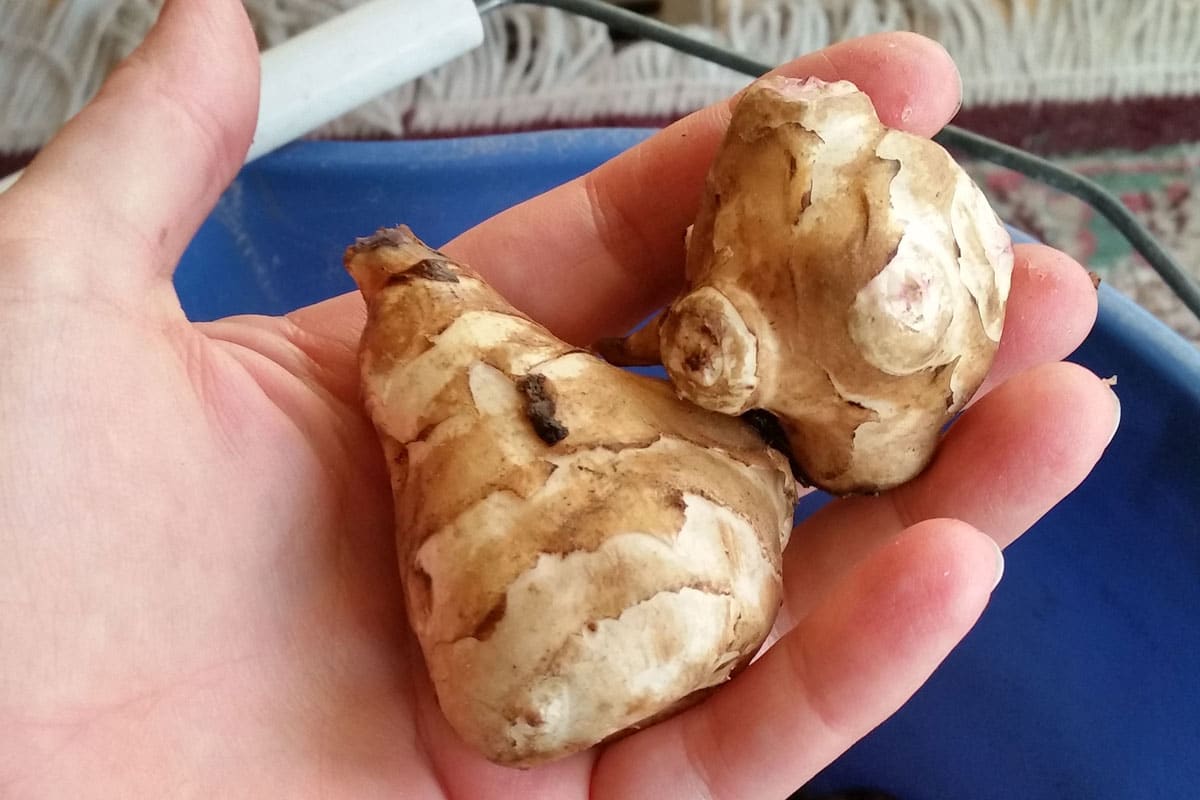
Sunchokes (AKA Jerusalem artichokes) are gaining popularity for their health benefits. I’m sharing how to grow sunchokes, when to harvest and how to use them – plus the big mistake that we made when we first planted them.
Would you like to save this?
Table of Contents
What are Sunchokes?
Sunchokes are native to eastern North America. They are also known as Jerusalem Artichokes or Sunroots. They are not related to Artichokes, but they are related to sunflowers. The whole “Jerusalem” thing is supposedly linked to the Italian word girasola, which means sunflower.
Sunchokes are a perennial plant that grows six to ten feet tall. While they do have pretty yellow flowers, most people grow them for their edible roots. Their roots are high in inulin, and eaten raw or cooked.
Historically, Native American valued them as a food source, especially during late winter when food supplies run low.
How do you Grow Sunchokes?
Grow sunchokes from roots or sections of root, planted in spring or fall while roots are dormant. You can grow the plants from seed, but starting with tubers is easier and faster.
For best results, use the following planting guidelines:
- The plants prefer loose, well-drained soil, but will tolerate poor soils. (Lighter soil makes harvesting easier.)
- Space sunchoke tubers 12 to 18 inches apart, 4 to 6 inches deep.
- Space rows 4-6 feet apart (they will be prone to spreading).
- Soil temperature at planting should be at least 50°F.
- Plant in full sun.
- Do not plant in areas that are consistently wet, as wet soil will rot the tubers. Plants are drought tolerant, but produce best will a regular supply of water.
- pH of soil best between 5.8 and 6.2 (neutral soil)
- Preferred growing temps = 65 to 90 F.
- Cover your soil with an inch or so of organic mulch for easier harvesting and root protection.
- Plant in a dedicated bed that can be mowed around for control. Or sink barriers into the soil around the sunchokes at least 24 inches deep to prevent spreading. (More on this below.)
When are they Ready to Harvest?
Harvest sunchokes in late fall or early spring. They require 110 -150 days to maturity, depending on the variety and growing conditions. Light frost increases the sweetness of the tubers.
Unlike potatoes and some other root crops, sunchokes do not store well. Their skin is thin and dries out easily. I keep them in the refrigerator for 1-2 weeks. They keep best in the ground, dug as needed for use.
In northern areas, a thick layer of mulch may keep your tubers accessible longer. It may also encourage mice or voles to move in and have a snack, but there’s usually enough to share.
For bigger roots, avoid crowding plants and water regularly. You can also cut off flower stalks to encourage root growth. Please don’t cut off all your sunchoke flowers! They flower late in the season, when pollinators have few flower choices.
How do I Eat Jerusalem Artichokes?
Sunchokes are edible raw or cooked, including the skins. They are difficult to peel and turn grey quite quickly, so a good scrubbing is a better option.
Raw, sunchokes are similar in texture to a water chestnut or jicama. After a light frost, they take on a somewhat nutty flavor. For my part, they taste best raw after a frost.
See Jerusalem Artichoke Recipes for easy recipes and cooking tips.
Do Sunchokes Cause Gas?
Sunchokes are loaded with inulin. Inulin is a type of starch that acts as a prebiotic in the digestive tract, feeding our beneficial bacteria.
Inulin is a widely used filler in many foods to bump up the fiber counts. It also increases calcium absorption in the body, and doesn’t spike blood sugar. There are even sweeteners made for diabetics made out of sunchokes.
See Jerusalem Artichoke Benefits: Nutrition, Flavor, and Uses for more information.
Eating a large amount of sunchokes may lead to “mild gas”. They have the nickname “fartichokes”.
I can verify that eating a large portion of boiled sunchokes will give you horrible, gut-racking gas like you have never experienced before… except for that one time when you were pregnant and thought it was a good idea to eat prunes, cheese curds and cucumbers in large amounts all at the same time.
Start slowly when eating sunchokes, and perhaps avoid serving them in large quantities at dinner parties. Give your digestive system time to build up the right bacteria to deal with the extra inulin.
Readers have suggested a couple of different tips to beat sunchoke gas. One suggested that you eat some sunchokes raw, and don’t scrub all the dirt off.
I assume that some soil microbes come with to help aid digestion. Another reader says that harvesting after frost is a big help, as the frost naturally breaks down some of the inulin for you.
A Word of Caution About Growing Sunchokes
“Easy to grow” and “disease-free through heat and drought” are code words for “You will Never Get Rid of this Plant!”
When I first planted sunchokes, I skimmed over the note in the seed catalog that said “they will spread and may be invasive”.
I planted my tubers late in spring, in one corner of a garden bed. There were nine rather wrinkled little roots, and I didn’t think they would all survive. Not only did they survive, they thrived. We tried to harvest the whole patch that first year, but must have missed a few.
The next spring they were back, and they were spreading. We tried to keep up eating them, but the fall was muddy and we couldn’t get in to harvest.
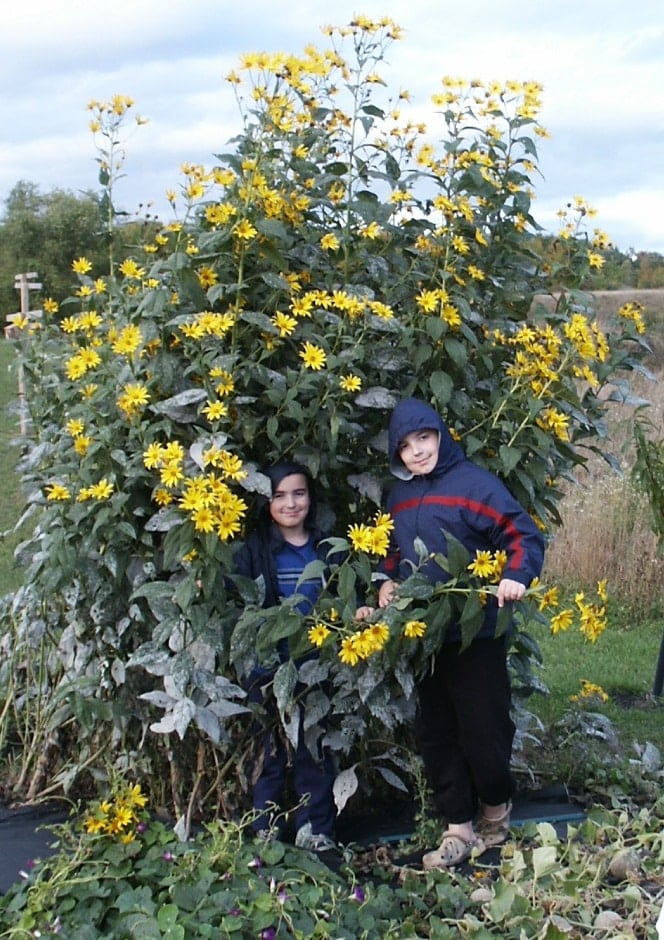
By the third season, we had the lovely thicket of 12 foot tall flowers you see at the post. As I was digging them in fall, I tossed some damaged roots off into the tall grass away from the garden.
Sunchokes Spread from the Smallest Bit of Tuber
Fast forward to spring. Those root bits haphazardly thrown into the weeds – they’ve now sprouted into plants. There’s a new sunchoke colony.
I decide to get rid of extra sunchokes. Two friends come over.
Four different adults attack the patch. Bushels and bushels of sunchokes leave the garden. The patch size is reduced roughly by half to start the spring.
Time passes. My boys work the bed again. They remove more sunchokes from the same area that the adults have already gone over.
Before I put the transplants in, I work over the same area one more time. THERE ARE STILL SUNCHOKES COMING UP! This area has been gone over by four adults and two kids, and there are still sunchokes hiding in the dirt.
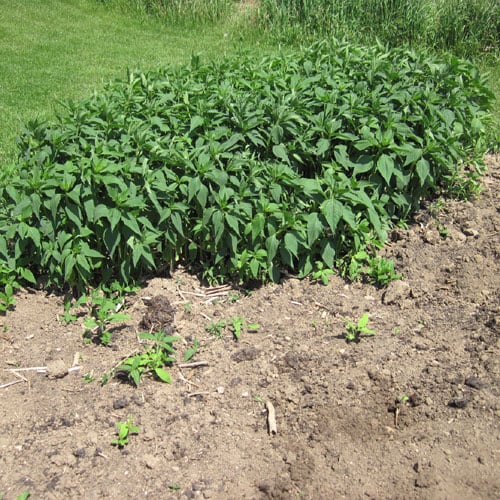
Here’s the main patch. You can see the smaller outliers in the foreground. That area should be clear.
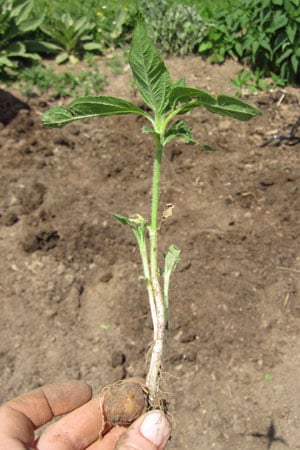
Here’s a nice, innocent looking sunchoke seedling.
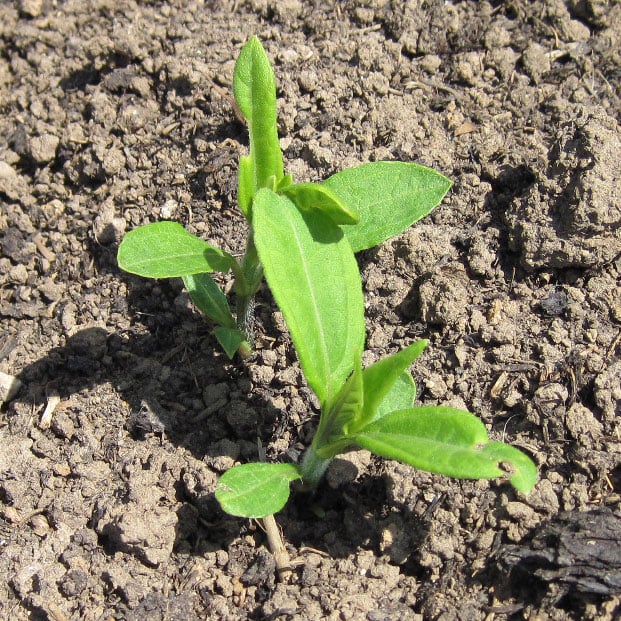
Once we dig it up, we see that this single tuber is trying to regrow an entire sunchoke thicket.
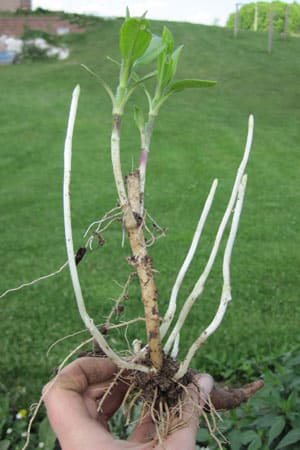
Even tiny pieces, no bigger than the tip of my thumb, can regrow entire large, vigorous plants.
They’re virtually unstoppable. Weeks later, and I’m still digging up shoots from among my cabbage seedlings.
Plan Ahead with Your Sunchoke Plantings
I urge you, do not plant sunchokes anywhere else you might like to grow other plants at some time in the future. You will spend very large amounts of time attempting to remove them if you do.
Plant them in their own area that you can mow around, to keep them under control. You can also plant them in pots – as long as they are big pots. Try one tuber per 18 inch diameter pot. Look for varieties that naturally grow shorter, and have an option for providing support if needed.
My neighbor says her horseradish plants are the same way. Plant both at your own risk. Maybe we should plant them next to each other, to see which one wins.
Alternatively, introduce pigs or chickens into your sunchoke area and let them tackle clean up duty. Jerusalem artichokes make a fine fodder crop.
What Tries to Take Over Your Garden?
Sunchokes are good for you. They look pretty, taste okay, and are quite expensive to buy in many areas, if they are available at all.
They’re a “perfect” choice for a new exotic vegetable to try. I just wanted to let you know that you’re likely to have a lifetime commitment with them once they enter your garden. Don’t say I didn’t warn you.
Are there any other plants you’ve grown that want to take over your garden? Leave a comment to warn other gardeners before they end up fighting them, too.
Also, if you could include in your comments roughly what area you are from, that would be great. Some plants will spread in some locations but not in others.




This article is written by Laurie Neverman. Laurie and her family have 35 acres in northeast Wisconsin. They grow dozens of varieties of fruiting trees, shrubs, brambles, and vines, along with an extensive annual garden. Along with her passion for growing nutrient dense food, she also enjoys ancient history, adorable ducks, and lifelong learning.
Originally published in 2012, last updated in 2026.
Planted them for the first time this summer in a raised bed with potatoes Location southwest Missouri
Sunchokes are allelopathic, meaning they spread a chemical deterrent against some competitive plants just like Walnut trees spread Jugalone which is their deterrent. However, it has no effect on some plants. I had ‘chokes in a large container for one year, then got rid of them and planted potatoes the next year. The potatoes were not affected by the ‘choke’s deterrent, but horseradish failed. Lambsquarters were stunted. Where they normally grow 4’ or better, they barely made it to 16″. I also put squash in that container the year after potatoes and the squash grew normally. Either the deterrent was leached out by the second growing season or squash aren’t affected either.
So, potatoes aren’t affected but other plants can be. It takes time to experiment, but it’s interesting. And be careful where you mulch the tops. I mulch the tops right back into the existing patches of ‘chokes. I’ve got one patch that’s 20 years old and the soil is so built up and fluffy I can simply pull the majority of the tubers by just pulling the tops with very little digging needed.
Interesting observations. Thanks for sharing.
I should’ve seen this article before I planted the leftover tubers I saved! They have definitely invaded my raised bed. Sign.
The good news is that they make a great emergency food. They’re determined to survive. At least the bees love the flowers in fall.
I planted spiderwort years ago. Dug up all of it three years ago and am still digging it up.
So… both invasive, and tall… I wonder if they would be a good companion plant for maypops?
Those aren’t cold hardy here, so I can’t try it out, but if you do, let me know.
Spiderwort is an amazing plant. Every part of it is edible, but it takes over quickly. The flowers taste like peas. The stalk is like asparagus. I never tried the bulbs, but they are edible also. Invasive doesn’t begin to describe how aggressive they are.
I also learned the hard way about sunchoke’s habit of taking over, but at least I had planted them in a raised bed. We got them eradicated in a couple seasons. And now I also realize they are native to New York state. I’m in zone 5b.
I then planted a quart container of common garden phlox (Phlox paniculata) and I now routinely for the last three years pull out handfuls each spring to keep them in check. They are such pollinator favorites….
I love phlox. I have pink and white ones transplanted from my mother’s garden – that just got run over by the guys trenching in the new electric run for the solar system. Argh. I know they eventually recover, but it’s so sad to see them flattened during prime bloom season. Better the flower bed than the vegetable bed, I guess.